
Keynote & Invited Speakers
ISSE 2026 Keynote and Invited Speakers
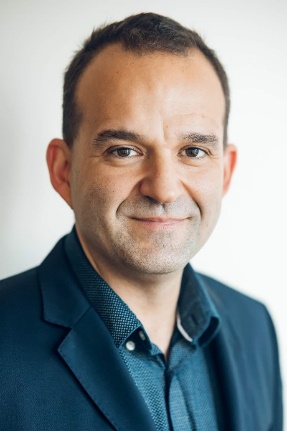
Keynote speaker: Prof. Dr. Balázs Illés
Job position: Head of the department, full professor
Company: Budapest University of Technology and Economics, Department of Electronics Technology
e-mail: illes.balazs@vik.bme.hu
Title of the presentation: Quality and reliability of SnAgCu nano-composite solder joints
Short CV:
Prof. Balázs Illés is a full professor at the Budapest University of Technology and Economics (Hungary), where he is the head of the Department of Electronics Technology. His main research topics are numerical simulation and measurement of heat and mass transport during manufacturing processes, solder alloy metallurgy, and quality and reliability of solder joints. He is an active member of the IMAPS Poland Chapter. He is the author of 208 scientific publications, including 1 book, 2 book chapters, 104 journal papers, and 101 conference papers.
Abstract:
The mechanical and electrical structures of microelectronic circuits are still based on solder joints, so their quality and reliability are essential. The latest solution to improve the properties of solder alloys is to add nano-sized ceramic reinforcement particles (e.g., SiC, ZnO, TiO2, ZrO2, Al2O3) and form “composite” solder joints. The reinforcement particles improve the mechanical properties of the solder joints. Dispersion-strengthening mechanisms cause the mechanical improvement. The ceramic nanoparticles are not soluble in the Sn solders, so they incorporate at the Sn and intermetallic (Cu6Sn5, Cu3Sn, and Ag3Sn) grain boundaries, where they promote heterogeneous nucleation. This results in the suppression of grain growth and a decrease in dislocation motion. So, composite solder alloys could be the future of soldering technology, but their quality and reliability are less well-known.
In this presentation, the current state of composite soldering technology will be illustrated through examples of quality and reliability investigations, including mechanical, thermal, and corrosion properties for simple chip components, power FETs, and LEDs. It will be shown that most ceramic nanoparticles enhanced the initial mechanical and thermal properties of the solder joints. However, some increased, while others decreased, in the corrosion resistance of the composite solder joints. So, only an appropriate selection of applied ceramics can ensure the further development of microelectronics.

Keynote speaker: Prof. Christophe Couteau
Job position: Professor and Dircetor of the Laboratory Light, Nanomaterials and Nanotechnologies
Company: University of Technology of Troyes
Title of the presentation: Diamond as platform for quantum photonics
Short CV:
Prof. Christophe Couteau obtained his PhD in physics from the University of Paris-Saclay in 2006 working on quantum optics with quantum dots at the University of Grenoble-Alpes and CNRS. He then spent 3 years as a Post-Doctorate Fellow at the Institute for Quantum Computing at the University of Waterloo in Canada working on quantum cryptography and the foundations of quantum mechanics before becoming a Research Assistant Professor there. He is now a Professor and since 2009, he works at the French University of Technology of Troyes (UTT) in France. He works on quantum photonics, nano-optics and quantum nanodevices. He also spent some time at the University of Oxford as a Research Fellow and was an Adjunct Assistant Professor at the Department of Electrical and Electronic Engineering of the Nanyang Technological University in Singapore for 4 years, from 2012 to 2016. During this time, he was also a CNRS researcher. He is currently the director of the Laboratory Light, nanomaterials & nanotechnologies, a joint research unit between the UTT and the CNRS and a visiting fellow at the Department of Physics at Oxford University in the UK. He is currently involved in the European University of Technology -EUT+ and he is in charge of the European Research Institute EUTINN on Nanomaterials and Nanotechnologies within this consortium of 9 European universities.
Abstract:
Diamond has emerged as a powerful platform for quantum photonics due to its ability to host optically active defect centres with exceptional quantum properties. In particular, the Nitrogen-Vacancy centre (NV centre) provides a spin system that can be initialised, manipulated, and read out optically, while maintaining long coherence times even at room temperature. Other defects, such as the group-IV vacancy centres, offer narrower optical linewidths and improved spectral stability, making them attractive for generating indistinguishable single photons. Beyond hosting these colour centres, diamond possesses excellent material properties, including a wide bandgap, high refractive index, and exceptional thermal conductivity, enabling low-loss photonic structures and stable device performance. Advances in nanofabrication now allow the integration of waveguides, cavities, and photonic crystal devices directly in diamond, enhancing light–matter interactions and enabling efficient spin–photon interfaces. These capabilities position diamond as a promising solid-state platform for scalable quantum networks, secure quantum communication, and high-sensitivity quantum sensing, while ongoing challenges remain in fabrication precision, spectral uniformity, and large-scale integration.
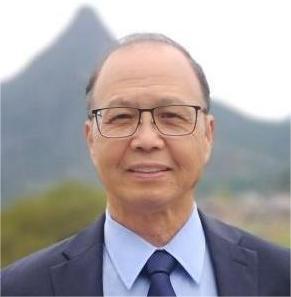
Keynote speaker: Prof. Juin J. Liou
Job position: Chair Professor
Company: Shandong University of Science and Technology, China
Title of the presentation: Micro/Nanoelectronics: Current Status, Outlook, and Reliability Issues
Short CV:
Juin J. Liou received the B.S. (honors), M.S., and Ph.D. degrees in electrical engineering from the University of Florida, Gainesville, Florida, USA in 1982, 1983, and 1987, respectively. In 1987, he joined the Department of Electrical and Computer Engineering at the University of Central Florida (UCF), Orlando, Florida where he held the positions of Pegasus Distinguished Professor, Lockheed Martin St. Laurent Professor, and UCF-Analog Devices Fellow. Dr. Liou is currently a chair professor at Shandong University of Science and Technology, China. Dr. Liou’s research interests are electrostatic discharge (ESD) protection design, modeling and simulation, and characterization.
Dr. Liou holds 30 patents and has published 13 books, more than 375 journal papers (including 25 invited review articles), and more than 280 papers (including more than 140 keynote and invited papers) in international and national conference proceedings. Dr. Liou has served as a technical reviewer for various journals and publishers, general chair or technical program chair for a large number of international conferences, regional editor (in USA, Canada and South America) of the Microelectronics Reliability journal, and guest editor of 7 special issues in the IEEE Journal of Emerging and Selected Topics in Circuits and Systems, Microelectronics Reliability, Solid-State Electronics, World Scientific Journal, and International Journal of Antennas and Propagation.
Dr. Liou received ten different awards on excellence in teaching and research from the University of Central Florida (UCF) and six different awards from the IEEE. Among them, he was awarded the UCF Pegasus Distinguished Professor (2009) – the highest honor bestowed to a faculty member at UCF, UCF Distinguished Researcher Award, IEEE Joseph M. Biedenbach Outstanding Engineering Educator Award in 2004 for exemplary engineering teaching, research, and international collaboration, and IEEE Electron Devices Society Education Award in 2014 for promoting and inspiring global education and learning in the field of electron devices. His other honors are Fellow of IEEE, Fellow of IET, Fellow of AAIA, Fellow of Singapore Institute of Manufacturing Technology, Fellow of UCF-Analog Devices, Distinguished Lecturer of IEEE Electron Device Society (EDS), and Distinguished Lecturer of National Science Council. He holds several honorary professorships, including the Chang Jiang Scholar Endowed Professor – the highest honorary professorship in China.
Dr. Liou had served as the IEEE EDS Vice-President of Regions/Chapters, IEEE EDS Treasurer, IEEE EDS Finance Committee Chair, Member of IEEE EDS Board of Governors, and Member of IEEE EDS Educational Activities Committee.
Abstract:
The industry of micro/nanoelectronics is highly vital to the global economy. While the research and development of microelectronics has been very active and fruitful in the past 40 years, many new technologies have emerged recently which makes the field of micro/nanoelectronics evolving, challenging, and unpredictable in the foreseeable future. Aside from the various semiconductor process and design metrics, reliability is also a critical measure to the quality of micro/nanoelectronic devices/circuits/systems, as no products can prevail in the markets without a high level of reliability. This talk has two parts, and it offers helpful information from the semiconductor industry perspective. An overview on the background, current status, and outlook of the field of micro/nanoelectronics will first be introduced in this talk. This is followed by the discussions of micro/nanoelectronics reliability background, protection requirements, and viable solutions for the current and emerging technologies.

Keynote speaker: Prof. Dr. Thomas Schumann
Job position: Professor at Faculty of Electrical Engineering and Information Technology
Company: University of Applied Sciences Darmstadt
Title of presentation: Edge-AI: Quo Vadis?
Short CV:
Thomas Schumann received his diploma degree and doctoral degree in electrical engineering from Technical University Berlin, in 1993 and 2000, respectively. During 1999 and 2005 he holds various positions in the design and manufacturing of integrated circuits at Infineon Technologies AG. In 2005 he became a professor at the University of Applied Sciences Darmstadt in the field of Microelectronics and Embedded Systems. He conducts application‑oriented research in Edge-AI, focusing on real‑time, resource‑efficient intelligent systems. He serves as a peer reviewer for Circuits, Systems & Signal Processing (Springer) and contributes as a Technical Program Committee (TPC) member to several IEEE-sponsored international conferences.
Abstract:
The “Cloud-First” era of Artificial Intelligence is facing a critical reality check. As we deploy AI into safety-critical and high-stakes environments, the overhead of the cloud—specifically unpredictable latency and data privacy risks—has become a deal breaker. A surgical robot cannot wait 200ms for a cloud inference to adjust a scalpel, nor can a hospital risk transmitting sensitive patient biometrics over public networks.
This keynote addresses the fundamental question: Where is the edge going? We explore how the industry is shifting toward a decentralized, “Privacy-by-Design” architecture where intelligence is no longer a remote service, but a local, real-time characteristic of the device itself. We analyze the convergence of Small Language Models (SLMs) and ternary 1.58-bit weight logic with next-generation hardware, including Neuromorphic Spiking Neural Networks (SNNs) and dedicated NPUs. By bypassing the “Memory Wall” through heterogeneous chiplet packaging and RISC-V customization, we are witnessing a technological paradigm shift. This session charts the roadmap to 2030, where AI transitions from cloud-dependent utility to ambient, energy-neutral intelligence.